Are Humans Actually Computers
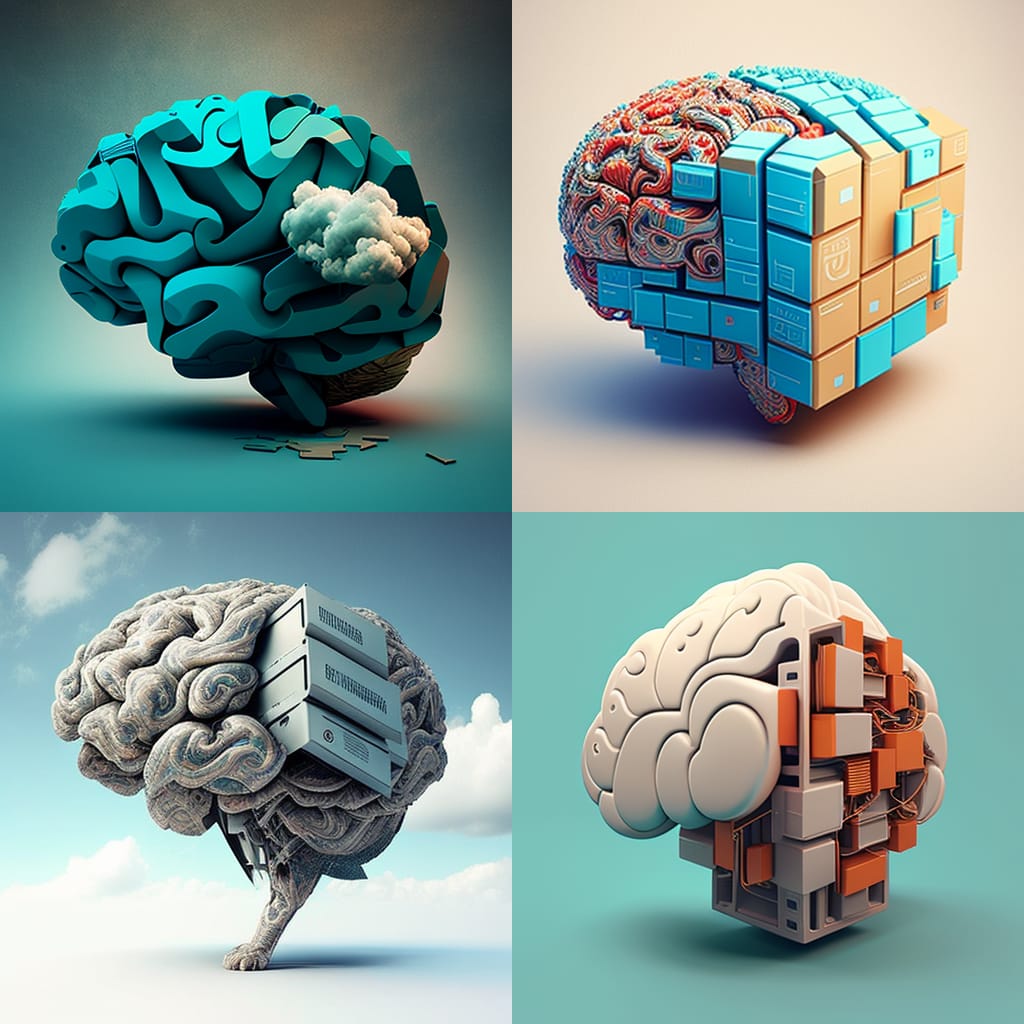
The Hidden Link Between AWS S3 Storage and the Human Brain. By Ilia Germa & Natali Cutic.
Could it be that humans are more like computers than we ever imagined? The stunning parallels between Amazon Web Services’ (AWS) Simple Storage Service (S3) and the human brain might just make you think twice about our true nature. In this eye-opening blog post, we’ll uncover the secret link between AWS S3 storage and the human brain, revealing how these two seemingly distinct systems operate with striking similarities. Are you ready to question everything you thought you knew about the boundary between humans and technology? Read on and be amazed!
The Incredible Storage Capacity
Our brains can store an astonishing amount of information, estimated at around 2.5 million gigabytes. AWS S3 storage also offers a nearly limitless capacity, allowing users to store and retrieve massive amounts of data in a scalable manner. It’s impressive how both systems can accommodate such vast amounts of information.
Organizing and Storing Data
The human brain organizes information in a hierarchical manner, starting with basic sensory input, which is then processed into meaningful patterns, ultimately leading to complex thoughts and memories. Similarly, AWS S3 employs a hierarchical structure for data organization, with buckets serving as top-level containers and objects holding the actual data and metadata inside the buckets. This organized approach enables both the brain and AWS S3 to efficiently store and manage information.
Built-in Redundancy for Reliability
The brain has multiple neural pathways that can store the same information, ensuring that if one pathway is damaged, the memory can still be retrieved through another route. AWS S3 also ensures data durability through redundancy, storing multiple copies of data across different facilities to protect against data loss and maintain high availability.
Efficient Access and Retrieval
Both the human brain and AWS S3 excel at accessing and retrieving stored information efficiently. The brain can quickly recall memories, while AWS S3 provides low-latency retrieval and high-performance access, allowing users to easily access and download their data when needed.
Adapting and Scaling
As we learn and grow, our brains adapt by forming new connections and strengthening existing ones. AWS S3 is designed with a similar ability to scale according to user demands. As the amount of stored data increases, the system dynamically adjusts its capacity to ensure consistent performance.
Prioritizing Security
The human brain is well-protected by layers of defense, such as the skull and the blood-brain barrier, which safeguard it from physical harm and foreign substances. AWS S3 also places a strong emphasis on security, providing features like encryption, access control policies, and logging to ensure the protection and privacy of stored data.
Conclusion
The remarkable similarities between AWS S3 storage and the human brain demonstrate how technology can draw inspiration from nature’s wonders. By understanding these connections, we can continue to develop and refine storage systems that are efficient, adaptive, and resilient, much like the human brain. The AWS S3 storage system offers a unique perspective on how we can leverage the principles of the human brain’s structure and function to create improved digital storage solutions for the future.